Remove hard water stains Utah residents encounter by spraying a warm solution of white vinegar and water onto glass or fixtures and letting it sit for 15 minutes to dissolve mineral buildup. For tougher deposits in toilets or on shower doors, utilize professional strength cleaners containing silica or blue dish soap mixed with vinegar to restore surfaces to their original shine.
If you live in Utah County or Juab County, you know the frustration of scrubbing a shower door only to see it remain cloudy and dull once it dries. The high mineral content in our local water supply creates stubborn white scale that resists standard household cleaners. These deposits are more than a cosmetic nuisance; they can cause permanent damage to your fixtures and glass surfaces over time. At Juab Cleaning, we understand the science behind these mineral bonds and how to safely break them down. In this guide, we will share our professional strategies for restoring clarity to shower glass, removing rings from toilet bowls, and polishing chrome fixtures. You will also learn effective prevention methods and how to identify when a stain requires expert remediation to avoid surface etching.
The Reality of Hard Water Stains in Utah County and Juab County
In Utah County and Juab County, the struggle with hard water stains Utah residents experience is tied directly to our unique geology. Local water sources are heavily saturated with dissolved minerals, primarily calcium and magnesium. Utah consistently ranks among the highest in the nation for water hardness, explaining why homeowners in Provo, Spanish Fork, and Nephi often find a thick white crust on their glass and porcelain just days after cleaning.
Distinguishing between a simple water spot and a calcified mineral deposit is essential for effective maintenance. A water spot is merely a surface level residue left behind after water evaporates; it usually wipes away with a dry cloth. In contrast, a calcified deposit occurs when these minerals chemically bond to a surface and accumulate in layers. This creates a rough, opaque texture that cannot be removed by scrubbing alone.
Our team encounters these challenges daily while providing professional residential cleaning services. We recognize that addressing these deposits requires more than just elbow grease; it requires an understanding of the chemical bond between the minerals and your fixtures. This high mineral density is the reason why customized cleaning plans are often necessary to maintain the integrity and appearance of local homes.
How to Remove Hard Water Stains from Glass Shower Doors

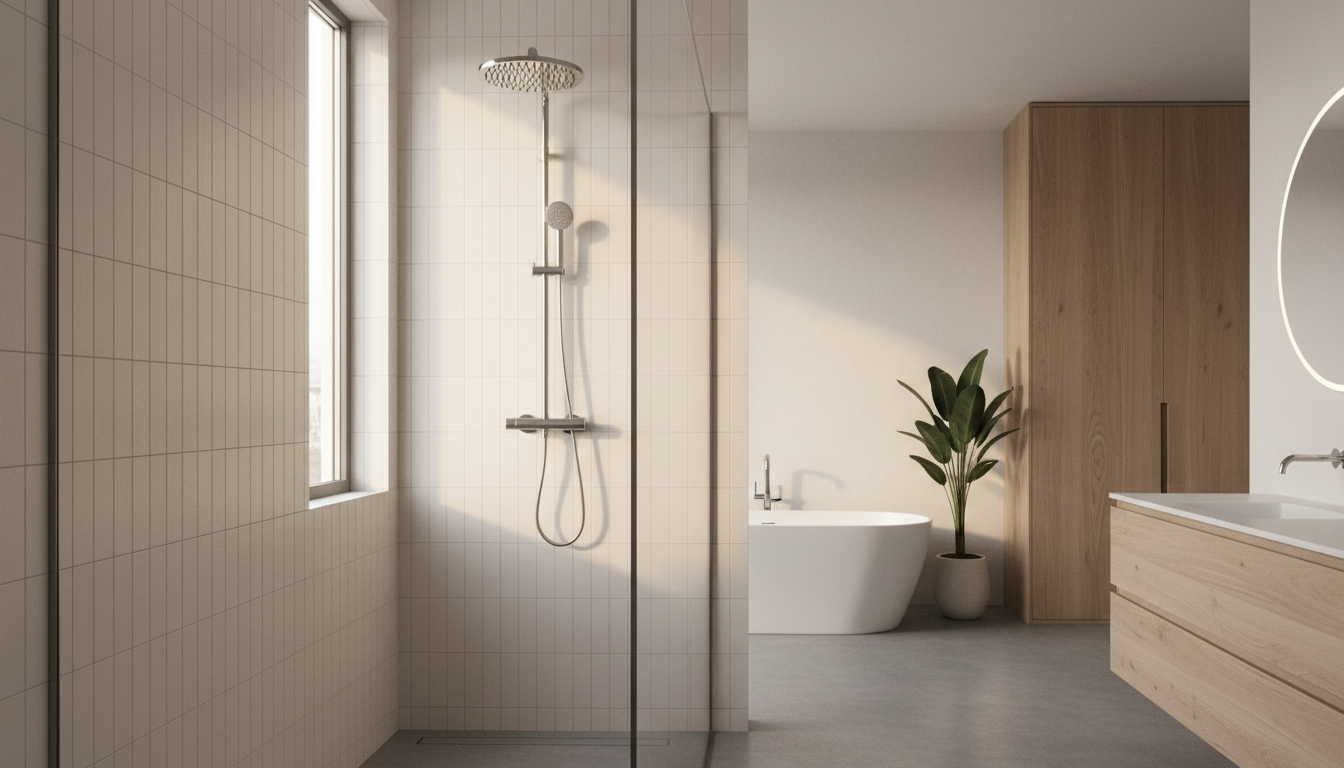
Glass shower doors are often the most frustrating area for homeowners dealing with hard water stains Utah presents. Because glass is transparent, even a thin layer of mineral buildup creates a cloudy, neglected appearance that standard glass cleaners cannot touch. To combat this effectively, we recommend a specific solution consisting of 20% blue dish soap, 20% white vinegar, and 60% distilled water.
The effectiveness of this mixture lies in the chemistry of the ingredients. White vinegar contains acetic acid, which is essential for dissolving the alkaline calcium and magnesium deposits that bond to the glass. However, these minerals are often shielded by a layer of body oils and soap scum. The blue dish soap acts as a powerful surfactant, cutting through those lipids so the vinegar can reach the mineral core. For the best results, spray the solution generously over the glass and allow it to sit for 10 to 15 minutes. This dwell time is critical; it allows the acid to chemically break down the crystalline structure of the scale before you begin scrubbing with a non-abrasive sponge.
When glass has been neglected for several months, a liquid solution may not be enough to penetrate the calcification. In these instances, more aggressive mechanical action is required. We often utilize professional grade silica-based pastes or diamond-dust cleaners. these products contain microscopic abrasives that are harder than the mineral deposits but softer than the glass itself, allowing for the physical removal of the buildup without scratching the surface.
Achieving a factory-clear finish on heavily fouled glass requires patience and the right tools. If your shower doors have reached a point where DIY methods are no longer effective, our professional residential cleaning services include the heavy duty descaling techniques necessary to restore clarity. Many of our customized cleaning plans include periodic deep cleans of glass surfaces to ensure that these stubborn minerals never have the chance to permanently bond to the substrate.
Banishing Stubborn Mineral Rings from Toilet Bowls
While glass doors show every streak, toilet bowls often harbor the most stubborn hard water stains Utah residents encounter. To effectively answer the question of what takes hard water stains off a toilet bowl, one must first understand that mineral rings often sit right at the water line where evaporation is constant. To treat these deposits effectively, you must lower the water level. This can be done by turning off the water valve behind the toilet and flushing, or by using a plunger to push the water down the trap, exposing the mineral ring directly to your cleaning agents.
For routine maintenance, saturate the exposed ring with white vinegar or 3% hydrogen peroxide. Let the acid sit for at least thirty minutes to dissolve the calcium. For a more potent, eco-friendly alternative that we frequently utilize in our customized cleaning plans, use citric acid powder. Sprinkle two to three tablespoons of the powder directly onto the damp mineral ring. As it sits, the citric acid acts as a chelating agent, pulling the minerals away from the porcelain without the harsh fumes of industrial chemicals.
In cases of extreme buildup where the ring has become a thick, grey shelf, a pumice stone is a common recommendation. However, use extreme caution; a dry pumice stone or excessive pressure can permanently scratch the porcelain finish, leaving micro-abrasions that will actually trap minerals faster in the future. Always ensure both the stone and the surface are wet before gently buffing the area. If the buildup persists or if you are concerned about damaging your fixtures, our professional residential cleaning services can safely remediate the scale using specialized tools designed for delicate porcelain surfaces.
Restoring Shine to Chrome and Brass Fixtures
Faucets and showerheads often lose their luster because of the persistent hard water stains Utah residents face daily. Beyond aesthetics, dissolved minerals accumulate inside aerator screens and spray nozzles, eventually restricting water flow and causing uneven pressure. To restore functionality and shine to chrome or stainless steel, we recommend the baggie method. Fill a plastic bag with white vinegar, submerge the faucet head or showerhead, and secure it with a rubber band overnight. The prolonged contact dissolves deep-seated calcium without the need for aggressive tools.
For lighter scale on chrome, a fresh lemon half serves as a natural, effective solution. Rub the pulp directly over the spots; the citric acid acts as a mild solvent to lift mineral haze. However, modern designer finishes require a different approach. If your home features matte black, gold, or oil-rubbed bronze fixtures, avoid all abrasive scrubbers and acidic soaks, which can permanently strip the delicate coating. For these surfaces, use only soft microfiber cloths and pH-neutral cleaners. Maintaining high-end fixtures is a standard part of our customized cleaning plans. If your aerators are completely seized by mineral buildup, our professional residential cleaning services utilize specialized descaling agents to restore flow without damaging your hardware.
Prevention Strategies: Keeping Utah Water Spots at Bay
While restoring fixtures is vital, preventing the return of hard water stains Utah residents face is the only way to break the cycle of constant scrubbing. The most effective daily tool for any bathroom is a simple squeegee. By removing standing water from glass and tile after every use, you prevent evaporation; this is the specific moment when minerals solidify into a hard, white crust.
Beyond manual removal, addressing the source of the problem provides the most lasting relief. Installing a whole-home water softener is the gold standard for maintenance in Utah County and Juab County. These systems exchange calcium and magnesium ions for sodium, neutralizing the cause of buildup before it reaches your showerhead.
For glass surfaces, hydrophobic treatments act as a powerful secondary defense. Applying products like Rain-X or professional polymer coatings creates a microscopic barrier that makes the glass water-repellent. Water beads up and rolls away instead of drying in place. Implementing these proactive measures significantly reduces the deep-cleaning frequency required during professional residential cleaning services. Maintaining these protective barriers is a core feature of our customized cleaning plans, helping to preserve your home’s value and aesthetic appeal.
Can Hard Water Stains Be Permanent on Glass?
Hard water stains Utah homeowners frequently battle are usually removable, but they can indeed become permanent through a process known as etching. While glass feels smooth to the touch, it is a porous material. When calcium and magnesium deposits are left to sit for years, they don't just rest on the surface; they undergo a chemical reaction with the silica in the glass. This results in microscopic pitting and scarring that fundamentally changes the texture of the pane.
Once etching occurs, standard cleaning methods and even professional-grade acids will fail to restore clarity. The cloudiness you see is no longer a layer of minerals that can be dissolved, but rather physical damage to the glass itself. Distinguishing between a heavy mineral crust and permanent etching requires a trained eye. As part of our professional residential cleaning services, we provide a thorough assessment to determine if your glass can be salvaged through intensive descaling or if the damage is structural. Incorporating specialized care into customized cleaning plans is the most effective way to identify these risks early, ensuring that temporary buildup never progresses into a permanent and costly replacement.
When to Call a Professional for Hard Water Remediation

While home remedies like vinegar and dish soap work for routine maintenance, heavy accumulation often requires a higher level of intervention. Professional cleaners utilize industrial strength, eco-friendly descalers that penetrate mineral layers much faster than household acids. These solutions are formulated to be safe for your home environment while providing the chemical strength needed to break down long-term neglect. We also employ specialized tools, such as oscillating scrubbers and precision scrapers, that safely remove buildup without the risk of scratching porcelain or glass.
Professional remediation is particularly critical during move-in or move-out transitions when fixtures must be restored to their original state quickly. If hard water stains Utah homeowners face have progressed to the point of clogging aerators or significantly reducing showerhead pressure, it is time to look beyond the pantry. Our professional residential cleaning services save busy families hours of frustrating, physical labor. By incorporating these treatments into customized cleaning plans, you ensure your hardware remains functional and aesthetically pleasing. For an expert assessment of your home's needs, Contact Juab Cleaning to schedule a deep clean that restores your surfaces to their best possible condition.